
Introduction
The gaming industry has always been driven by innovation. From the pixelated arcade games of the 1970s to today’s ultra-realistic open-world adventures, technology has consistently pushed the boundaries of interactive entertainment. One of the most exciting developments in recent years is Virtual Reality (VR) gaming, a technology that allows players to step inside digital worlds and experience games in ways that were once only imagined in science fiction.
Virtual reality gaming is transforming how players interact with games by creating immersive environments where they can move, explore, and engage naturally. Instead of simply watching a character on a screen, players become part of the experience itself.
As VR hardware becomes more powerful, affordable, and accessible, virtual reality gaming is rapidly emerging as a major force within the entertainment industry. This technology has the potential to redefine not only gaming but also education, healthcare, training, and social interaction.
In this article, we explore how virtual reality gaming is transforming entertainment in the digital age and what the future may hold for this revolutionary technology.
What Is Virtual Reality Gaming?
Virtual reality gaming refers to video games played using VR headsets and motion-tracking technology that immerse players in a fully digital environment.
Unlike traditional gaming, where players view action through a monitor or television, VR gaming places users directly inside the virtual world. Players can look around, interact with objects, and move naturally within the game environment.
Modern VR systems use advanced sensors, motion controllers, and high-resolution displays to create realistic and responsive experiences.
The goal of virtual reality gaming is to make players feel physically present within a digital world, increasing immersion and engagement beyond what traditional gaming can offer.
The Evolution of Virtual Reality Gaming
Although virtual reality may seem like a modern invention, the concept has existed for decades.
Early VR experiments began in the 1960s and 1970s, but technological limitations prevented widespread adoption. Hardware was bulky, expensive, and lacked the processing power required for realistic experiences.
The 1990s saw several attempts to introduce VR gaming to consumers. However, limited graphics capabilities and high costs restricted success.
The real breakthrough occurred in the 2010s when advancements in display technology, graphics processing, and motion tracking made practical VR gaming possible.
Today, virtual reality systems offer highly immersive experiences that continue improving with each generation of hardware.
How Virtual Reality Gaming Works
Virtual reality gaming combines multiple technologies to create immersive digital experiences.
VR Headsets
Headsets contain high-resolution displays positioned directly in front of the player’s eyes. These displays create the illusion of being inside a virtual environment.
Motion Tracking
Sensors track head and body movements in real time. When players move or look around, the virtual world responds instantly.
Motion Controllers
Handheld controllers allow players to interact with objects, weapons, tools, and environments naturally.
Spatial Audio
Three-dimensional sound systems enhance realism by allowing players to hear sounds from specific directions within the virtual environment.
Together, these technologies create experiences that feel significantly more immersive than traditional gaming.
Why VR Gaming Is So Popular
Virtual reality gaming offers several advantages that attract players worldwide.
Unmatched Immersion
The biggest appeal of VR gaming is immersion.
Players no longer observe virtual worlds from a distance. Instead, they experience those worlds from a first-person perspective, creating a stronger emotional connection with gameplay.
Realistic Interactions
Motion tracking allows players to perform actions naturally.
Instead of pressing buttons to swing a sword or throw an object, players physically perform those movements themselves.
This creates a more engaging and realistic experience.
New Gameplay Possibilities
Virtual reality introduces entirely new game mechanics that are impossible on traditional platforms.
Developers can create experiences centered around physical movement, environmental interaction, and spatial awareness.
This opens exciting opportunities for innovation and creativity.
Popular Genres in Virtual Reality Gaming
Virtual reality technology supports a wide variety of gaming genres.
Action and Adventure Games
Players can explore detailed worlds, solve puzzles, and participate in intense combat scenarios.
Simulation Games
Flight simulators, racing games, and sports titles become significantly more immersive when experienced through VR.
Horror Games
Virtual reality enhances suspense and tension by placing players directly inside frightening environments.
Fitness Games
Many VR games encourage physical activity through movement-based gameplay, turning exercise into entertainment.
Educational Experiences
VR gaming is increasingly being used for interactive learning and skill development.
The versatility of VR technology continues expanding its appeal across diverse audiences.
The Impact of VR on the Gaming Industry
Virtual reality is influencing game development in several important ways.
Developers are designing experiences specifically for immersive environments rather than adapting traditional gameplay models.
Game worlds are becoming more interactive, allowing players to manipulate objects and environments naturally.
VR is also encouraging innovation in storytelling. Players can experience narratives from unique perspectives and actively participate in unfolding events.
As VR adoption increases, developers are investing more resources into creating dedicated virtual reality content.
Challenges Facing Virtual Reality Gaming
Despite its potential, VR gaming still faces several challenges.
Hardware Costs
Although prices have decreased, high-quality VR systems can still be expensive for many consumers.
Motion Sickness
Some players experience discomfort during VR sessions due to differences between visual movement and physical motion.
Space Requirements
Many VR experiences require room for movement, which may not be available in every home.
Content Availability
While the library of VR games continues growing, it remains smaller than traditional gaming platforms.
Overcoming these challenges will be essential for broader adoption.
Virtual Reality Beyond Entertainment
The influence of virtual reality extends beyond gaming.
Education
Students can explore historical locations, conduct virtual science experiments, and engage with educational content interactively.
Healthcare
Medical professionals use VR for training, rehabilitation, and therapeutic treatments.
Business Training
Companies use VR simulations to train employees in realistic workplace scenarios.
Social Interaction
Virtual reality platforms allow users to meet, communicate, and collaborate within shared digital spaces.
These applications demonstrate VR’s potential to transform multiple industries.
Artificial Intelligence and the Future of VR
Artificial intelligence is expected to enhance virtual reality experiences significantly.
AI-powered characters can respond more naturally to player actions, creating dynamic interactions and realistic conversations.
Machine learning algorithms may personalize experiences based on individual preferences and behaviors.
AI can also improve graphics optimization, motion tracking accuracy, and procedural content generation.
The combination of VR and AI could lead to digital worlds that adapt intelligently to each player’s unique experience.
The Future of Virtual Reality Gaming
The future of virtual reality gaming is incredibly promising.
Advances in hardware will likely make VR headsets lighter, more comfortable, and more affordable. Improved displays will offer higher resolutions and greater realism.
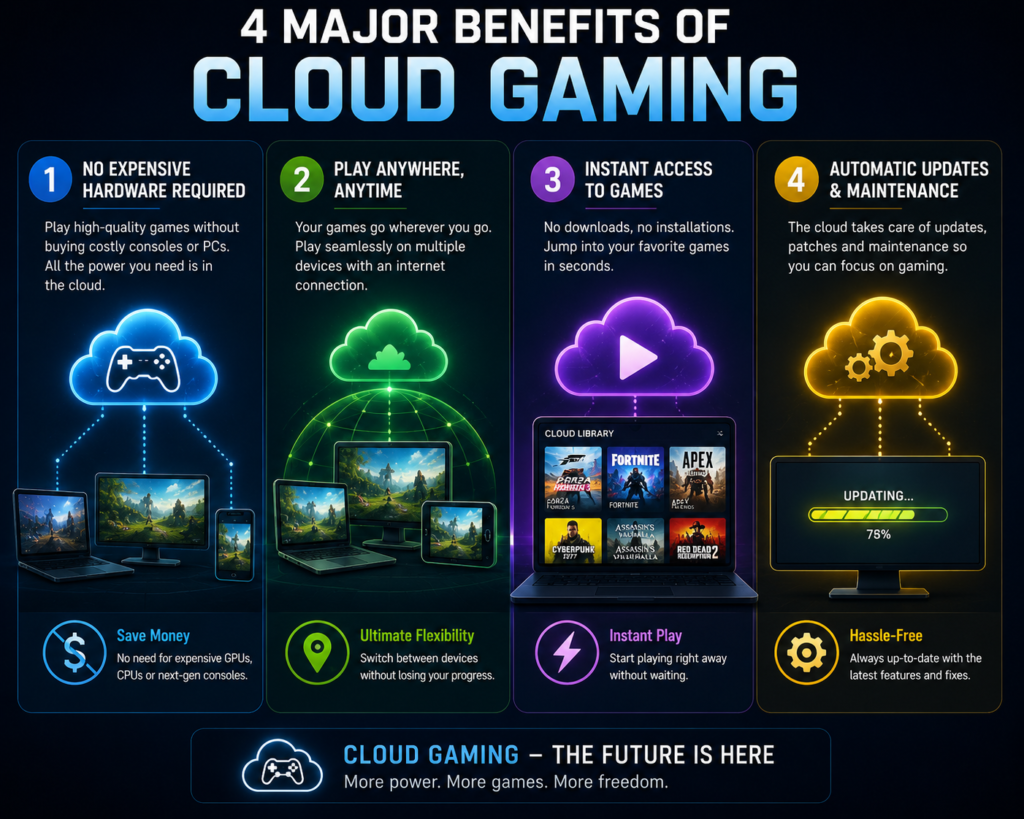
Faster internet connections and cloud gaming technologies may allow complex VR experiences to run without expensive local hardware.
Augmented reality and mixed reality technologies could further blur the line between physical and digital environments.
Industry experts believe virtual reality will become an increasingly important part of mainstream entertainment over the coming decades.
Conclusion
Virtual reality gaming is transforming entertainment by providing immersive experiences unlike anything previously possible. Through advanced headsets, motion tracking, spatial audio, and interactive environments, VR allows players to become active participants in digital worlds rather than passive observers.
While challenges such as hardware costs and motion sickness remain, rapid technological progress continues improving accessibility and performance. As developers create more innovative experiences and adoption grows worldwide, virtual reality gaming is positioned to become a major pillar of the future gaming industry.
The digital age has already changed how people play games, and virtual reality is taking that transformation to an entirely new level. The journey has only just begun, and the future of VR gaming looks more exciting than ever.
yes thats good
tzonnruwrfwezqgzqzrqeiqiizdjqm